A house fire can leave a property owner with several problems at once. Flames may damage one area, while smoke and soot travel into rooms that never burned. Water from fire hoses or sprinklers can soak drywall, flooring, insulation, furniture, and other materials. Once the fire department leaves, homeowners are often left asking the same question: What happens now?
For homeowners in Beaverton and throughout the Portland area, understanding fire damage restoration makes those next decisions easier. The process can involve fire and smoke inspection, soot cleaning, odor removal, structural evaluation, contents cleaning, water mitigation, documentation, and communication with insurance professionals. The exact combination depends on what happened inside the property.
Rytech Restoration of Portland serves residential and commercial properties throughout Washington, Clackamas, and Multnomah counties. The local team provides 24/7 emergency response and IICRC-certified restoration services, supported by Rytech's nationwide experience dating back to 1995.
Whether you are a homeowner dealing with your first fire loss, a property manager helping tenants, or an insurance professional coordinating a claim, the following questions explain what to expect.
What Are the Most Common Causes of Home Fires in Oregon?
Cooking, heating equipment, and electrical problems are among the leading causes of home fires in Oregon. Oregon State Fire Marshal data shows that 2,518 home fires occurred statewide in 2023, causing $119.5 million in property losses. Cooking remained the leading cause, followed by home heating.
Older state fire data gives homeowners an even closer look at where fires can begin. In Oregon residential structure fires, ranges and stoves were the leading equipment involved in ignition in the state's 2022 data, with 196 reported incidents. Heating stoves, ovens, electrical wiring, clothes dryers, fireplaces, chimneys, and HVAC equipment also appeared among leading ignition equipment.
That local context matters in Beaverton. The Portland metro area contains everything from older wood-framed homes and mid-century houses to newer developments, apartments, condominiums, and commercial buildings. The construction materials and layout can influence how heat, smoke, soot, and firefighting water move through a property.
“Around Beaverton and the Portland area, we see a wide mix of building ages, wood-framed homes, drywall assemblies, insulation systems, flooring materials, and HVAC layouts. A kitchen fire may start in one small area, but smoke and firefighting water can travel well beyond that room. Our local experience, backed by Rytech’s more than 30 years in property restoration, teaches us to inspect the whole affected environment before deciding what can be restored and what needs to be removed.”
David Lopez, Rytech Restoration of Portland
What Should I Do Immediately After a House Fire?
Your first steps happen before restoration begins. Get everyone out of the building, follow instructions from firefighters and emergency officials, and remain outside until authorities have addressed the immediate emergency.
Once the property has been released, contact your homeowners insurance provider and a professional restoration company. This begins the documentation and recovery process while the conditions are still fresh. Photos and detailed records can help establish what was affected before restoration work progresses.
Avoid treating soot like normal household dirt. Moving soot-covered belongings through clean rooms or wiping surfaces without understanding the residue can transfer contamination. A restoration professional can determine which areas require attention and establish an organized sequence for cleaning, drying, contents handling, and material removal.
Rytech Restoration of Portland provides 24/7 emergency response in Beaverton and surrounding Portland-area communities.
How Is Fire and Smoke Damage Assessed?
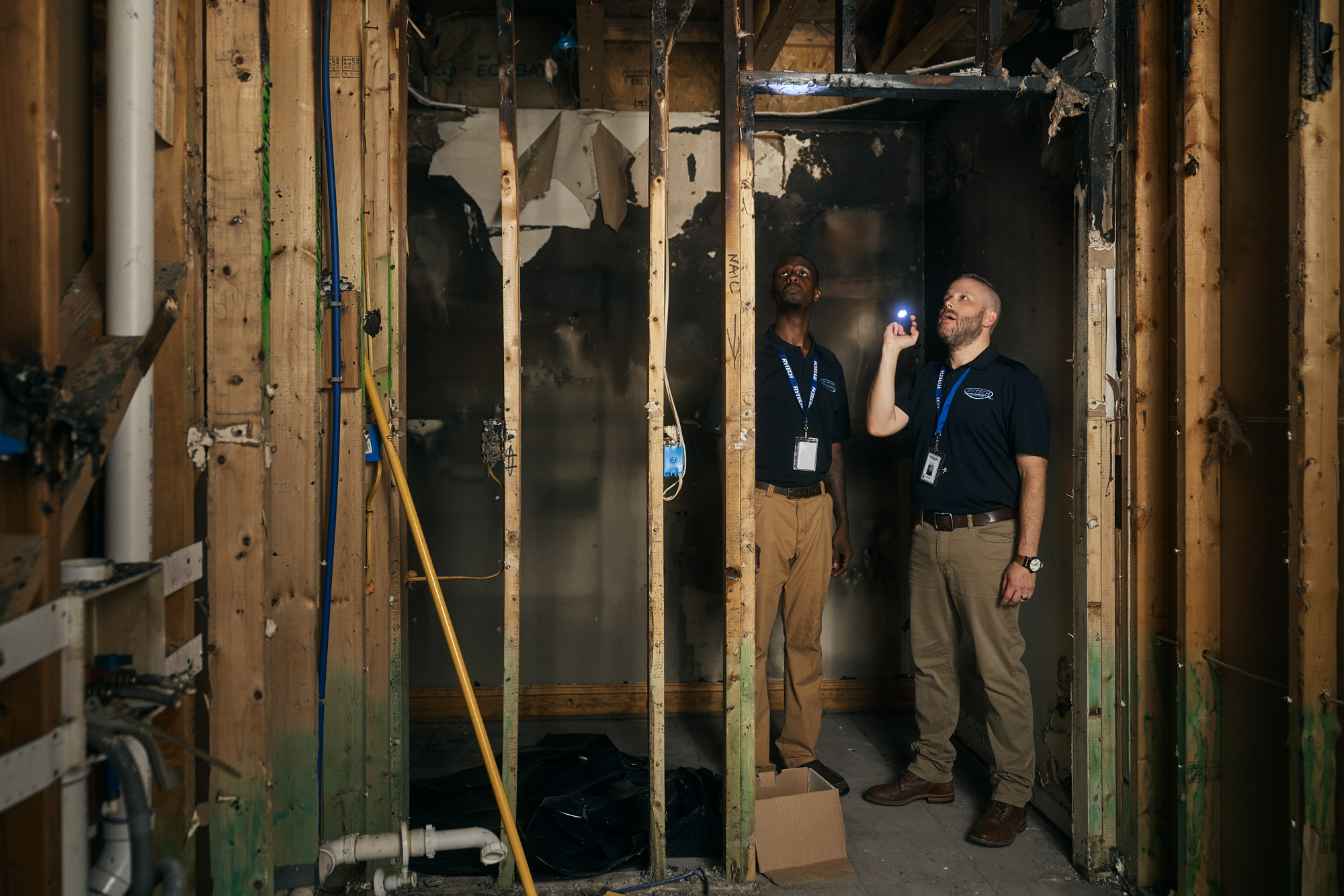
A professional fire damage inspection looks beyond what burned. Technicians evaluate visible fire damage, smoke and soot distribution, odors, affected building materials, personal property, moisture from firefighting activities, and areas where residues may have traveled.
Building layout becomes part of that investigation. Smoke can move through open rooms, stairwells, doorways, wall and ceiling spaces, attics, and mechanical systems. Professional fire and smoke restoration guidance also recognizes HVAC systems as potential pathways for distributing residues from a structural fire.
Water damage receives its own evaluation. ANSI/IICRC S500 calls for restorers to establish drying goals for affected materials and document moisture measurements while drying progresses. The standard also directs restorers to control moisture and contamination, clean affected materials, and use drying science to remove excess moisture.
Photos, measurements, moisture readings when applicable, affected-material records, and project notes create a clearer picture of the loss. That documentation also helps homeowners, property managers, adjusters, and other materially interested parties understand the restoration scope.
How Do I Start a Homeowners Insurance Claim After a Fire?

Contact your insurance carrier and report the loss as soon as practical. Provide the basic details of the fire and keep your policy information available. An adjuster can then begin reviewing the loss according to the terms, limits, deductible, and coverage in your policy.
Documenting damaged belongings also helps. Photos, videos, receipts, inventories, and other records can provide useful information about property that was affected. Restoration documentation adds another layer by showing what technicians observed and what mitigation activities were performed.
A homeowners policy may include several coverages that become relevant after a covered fire. Depending on the policy, these can include the dwelling, personal belongings, and additional living expenses. The National Association of Insurance Commissioners explains that many homeowners policies provide additional living expense coverage when a covered disaster leaves the home unlivable, helping with costs above the household's normal living expenses.
Most homeowners do not deal with property claims every day. Insurance agents, adjusters, carriers, and restoration professionals do. Rytech works with insurance professionals and provides direct insurance billing where applicable, allowing restoration documentation and claim communication to move through an established process.
What Is the Difference Between Professional Fire Restoration and DIY Cleanup?
A little soot on a wall can look like something that simply needs soap and a sponge. Fire residues are more complicated.
The materials that burned influence the residues produced by the fire. Those residues may interact differently with painted drywall, wood, metal, plastic, stone, flooring, upholstery, and other surfaces. A cleaning method that works well on one material may spread residue, alter a finish, or make another material harder to restore.
Professional restoration starts by evaluating both the residue and the surface. Technicians then select cleaning methods appropriate for those conditions and adjust the process according to results.
Professional restoration also addresses the broader environment. Smoke distribution, contents, odor, moisture, HVAC involvement, and affected building assemblies may all need consideration. What appears to be a small cleanup job can become a much larger investigation once technicians follow the path of smoke and firefighting water.
Rytech's restoration-first approach focuses on preserving affected materials when they can be successfully restored. Materials that cannot be adequately restored can then be identified and removed rather than automatically demolishing everything in the affected area.
How Much Does Fire Damage Restoration Cost?
Fire damage costs vary widely because no two losses affect a building in exactly the same way. The size of the affected area, type of fire, amount of soot, water damage, contents, materials involved, labor, accessibility, odor conditions, and amount of material requiring removal all influence the final scope.
Current 2026 national consumer-market estimates from Angi place professional fire damage restoration between $3,083 and $52,031. Smoke remediation alone can range from approximately $200 to $12,000, depending on the amount of soot, odor, and related fire damage. These are broad national consumer estimates rather than Beaverton project quotes.
Another useful way to understand cost is to think about restoration decisions. If several rooms contain materials that can be cleaned and restored, the scope can look very different from a loss where heat has damaged materials beyond restoration.
Insurance compensation depends on the policy and covered loss. Your carrier and adjuster can explain how the deductible, limits, covered property, personal property provisions, and other policy terms apply to your situation.
How Are Smoke and Soot Removed?
Smoke cleanup starts with identifying where residues traveled and what materials they affected. Technicians can then develop cleaning procedures for those specific surfaces rather than applying one cleaning method everywhere.
For example, painted drywall, finished wood, hard flooring, textiles, metal, and furniture may respond differently to smoke residues. Professional cleaning methods account for those differences and generally progress according to the condition of the material and effectiveness of the cleaning process.
Mechanical systems may require separate attention. Fire and smoke restoration guidance recognizes that a recirculating HVAC system can provide a pathway from the fire source to other areas of a building. When inspection findings suggest HVAC involvement, further assessment can determine whether specialized cleaning is appropriate.
Rytech Restoration of Portland provides fire and smoke damage restoration services in Beaverton and Portland for residential and commercial properties affected by unexpected losses.
How Are Smoke Odors Removed After a Fire?
A strong fragrance may temporarily cover a smoky smell, but covering an odor is different from addressing its source. Effective deodorization works alongside cleaning.
Smoke particles and residues can settle onto surfaces, penetrate porous materials, affect contents, and move into less visible spaces. When those residues remain, odor can remain with them. Restoration professionals therefore look for affected materials and residue sources before choosing the appropriate deodorization process.
Depending on the conditions, a restoration plan can include detailed cleaning, ventilation, air filtration, contents treatment, and specialized deodorization methods. The method should fit the material and type of fire rather than relying on a single treatment for every property.
Odor also provides information during evaluation. IICRC fire and smoke guidance recognizes visual evaluation and odor assessment as useful tools when evaluating restoration results.
What Happens if Firefighting Water Leads to Mold Growth?
Fire hoses and sprinkler systems can save a structure while leaving significant water behind. Drywall, wood framing, insulation, flooring, cabinets, and personal property may absorb that moisture.
Professional water mitigation focuses on finding affected materials, removing excess water, establishing drying goals, and monitoring moisture until those goals are achieved. ANSI/IICRC S500 directs restorers to document moisture measurements during the drying process and investigate when expected progress toward drying goals is not occurring.
When conditions support mold growth, the project may also require professional mold remediation. The ANSI/IICRC S520 framework addresses professional assessment, containment, structural remediation, contents, HVAC considerations, and project documentation.
Rytech uses professional containment and mold removal procedures to isolate affected work areas and reduce harmful mold spores in the indoor environment. The goal is a controlled remediation process that addresses affected materials while limiting unnecessary disturbance elsewhere in the property.
What Happens When Fire Damages Structural Materials?
Fire can affect framing, roof assemblies, floor systems, walls, and other structural components. Heat exposure can also change the condition of materials even when they have not completely burned.
Different building materials respond differently. Wood framing, steel components, concrete, masonry, drywall assemblies, and engineered building products each require appropriate evaluation. When inspection findings indicate possible structural compromise, the appropriate specialized professional can evaluate those conditions.
Rytech's mitigation role centers on assessing the damage, restoring salvageable materials, cleaning affected surfaces, and removing materials that are beyond restoration. Structural engineering, electrical evaluation, roofing work, and other specialized disciplines can become part of the broader recovery process when conditions call for them.
For a Beaverton homeowner staring at a damaged ceiling or blackened wall, this explains why the first appearance does not determine the final scope. Inspection comes first.
Can Personal Belongings Be Saved After Fire Damage?
Many can. Smoke exposure does not automatically mean every item inside the property needs to be discarded.
Furniture, clothing, household goods, décor, and other contents can be evaluated according to material, condition, heat exposure, smoke and soot impact, odor, moisture, value, and the practicality of restoration. Some items can be cleaned within the property, while others may benefit from being packed out.
A professional packout creates an organized system for identifying, documenting, moving, cleaning, and storing selected belongings while work progresses in the affected structure. Rytech's Portland-area services include contents cleaning and packout capabilities for fire-damaged properties.
Documentation also matters when belongings cannot be restored. IICRC guidance recognizes coordination with materially interested parties when non-salvageable property is involved, particularly when an insurance carrier is compensating the owner for that property.
What Health and Safety Conditions Can Remain After a Fire?
Visible flames are only one part of a fire loss. A post-fire building may also contain smoke residues, soot, wet materials, damaged electrical components, weakened building materials, and affected mechanical systems.
Air movement deserves particular attention. Smoke can move into areas away from the fire, and HVAC systems may provide a pathway for residues. A professional assessment considers those pathways rather than assuming that rooms without visible fire damage were unaffected.
Reoccupation depends on the actual conditions found and the work required to address them. Structural, electrical, HVAC, environmental, or other specialists can evaluate conditions within their respective areas when the restoration inspection identifies a need for additional expertise.
Ask yourself a useful question before thinking about cleanup: Do I know where the smoke and water actually traveled? If the answer is no, an inspection provides the information needed to build the next steps around facts rather than appearances.
How Long Does Fire Damage Restoration Take?
A universal timeline does not work for fire restoration. A small kitchen smoke loss and a multi-room fire involving water, contents, structural materials, and HVAC components require very different scopes.
The affected square footage, soot conditions, drying time, amount of contents, odor, accessibility, specialty evaluations, insurance coordination, and other trades can all affect the schedule. A professional inspection allows the restoration team to establish a more realistic scope and timeline.
Documentation and communication help keep everyone aligned as the work progresses. This becomes especially valuable for property managers and commercial owners who may be coordinating tenants, employees, insurance professionals, vendors, and building access at the same time.
Rytech's Portland operation promotes daily job monitoring along with insurance coordination and 24/7 emergency service. That combination gives property owners and insurance professionals better visibility into the mitigation process.
How Do I Choose a Fire Damage Restoration Company in Beaverton?
Start with training and qualifications. Look for relevant IICRC certification, proper licensing and insurance, experience with fire and smoke losses, and a clear process for documenting the work.
Then ask how the company determines what actually needs to be removed. A restoration-focused contractor should evaluate salvageable materials before recommending demolition. That approach can reduce unnecessary disruption and help control the scope of a loss.
Communication deserves equal attention. Homeowners should understand what technicians found, what happens next, and how progress will be documented. Insurance professionals and property managers also benefit from organized records and consistent project updates.
Rytech Restoration of Portland is licensed, bonded, and insured, uses IICRC-certified technicians, works with insurance professionals, provides direct insurance billing where applicable, and offers 24/7 emergency response. The Portland location states that its certified team begins with an inspection and develops a mitigation plan grounded in ANSI/IICRC standards.
Rytech's larger network adds another layer of experience. The brand began in 1995 and has spent more than three decades developing restoration processes and customer service systems.
How Can Beaverton Homeowners Reduce the Risk of Another Fire?
Fire prevention begins with ordinary habits repeated every day. Cooking deserves particular attention because it remains Oregon's leading cause of home fires. Heating and electrical issues are also among the state's leading home-fire causes.
Oregon State Fire Marshal guidance recommends maintaining smoke and carbon monoxide alarms and paying close attention to cooking, heating, electrical equipment, smoking materials, and lithium-ion batteries. For heating equipment, state guidance recommends keeping combustible items such as paper, curtains, bedding, and furniture at least three feet away.
The state's 2023 numbers show why working alarms deserve attention. Among Oregon's 2,518 reported home fires that year, 417 occurred in homes where no smoke alarm was present.
Homeowners can also review their insurance policies periodically and keep an updated home inventory. Photos or video of rooms, major belongings, and valuable property can make documentation easier if a future loss occurs.
Get Inspected to Stay Protected After Fire or Smoke Damage

Once firefighters have controlled the emergency, a different question takes over: How far did the damage actually travel?
The answer may extend beyond the room where the fire started. Smoke, soot, odor, firefighting water, affected contents, and hidden moisture can create a restoration scope that is difficult to judge by appearance alone.
Rytech Restoration of Portland serves Beaverton, Aloha, Cedar Mill, Hillsboro, Tigard, Tualatin, Lake Oswego, Milwaukie, Portland, and surrounding communities across Washington, Clackamas, and Multnomah counties. The local team provides 24/7 emergency response, professional property inspections, IICRC-certified restoration services, contents services, drying and mitigation, smoke and odor removal, documentation, and insurance coordination.
If your home, rental property, commercial building, or insured property has been affected by fire, smoke, soot, odor, or firefighting water, call Rytech Restoration of Portland at (503) 298-0112. Ask questions, schedule an inspection, and get a clearer understanding of what was affected and what should happen next.
GET INSPECTED TO STAY PROTECTED.
FAQs: Answering Your Pressing Fire Damage Repair Questions
At Rytech Portland, we understand how stressful fire damage can be. That’s why we’ve created a helpful FAQ section to walk you through the entire restoration process. From what to expect during each phase to how we handle cleanup and communication, our answers are designed to provide clarity and confidence—so you feel supported every step of the way as we restore your home or business.


