Water damage can change the course of your day in minutes. A broken water supply line, overflowing washing machine, leaking roof during an Oregon rainstorm, or sewer backup can quickly affect flooring, walls, ceilings, and valuable belongings. Once water enters a building, it continues moving through porous materials until it is professionally extracted and the structure is properly dried.
For homeowners, business owners, property managers, and insurance professionals throughout Beaverton, Hillsboro, Tigard, Portland, Lake Oswego, Tualatin, and the surrounding communities of Washington, Multnomah, and Clackamas counties, understanding what happens during emergency water damage restoration makes the recovery process far less overwhelming. Knowing how restoration professionals inspect, document, dry, and monitor a property helps everyone involved make informed decisions from the very beginning.
At Rytech Restoration of Portland, we believe education is one of the most valuable tools during a property emergency. Our IICRC-certified restoration specialists follow the ANSI/IICRC S500 Standard for Professional Water Damage Restoration, using advanced moisture detection technology, drying science, and detailed documentation to develop restoration plans based on measurable conditions rather than assumptions. Every water loss is unique, which means every drying strategy should be tailored to the specific property.
Whether you're protecting your family home in Beaverton, managing commercial buildings throughout Portland, overseeing multifamily housing in Hillsboro, or assisting policyholders across Northwest Oregon, understanding the emergency restoration process provides confidence when every hour matters.
Understanding Water Damage in Beaverton and the Portland Metro Area
Water damage occurs whenever unwanted water enters a structure and begins affecting building materials, structural components, furnishings, or indoor environmental conditions. While many people think only of flooding, water damage often begins with much smaller events that remain unnoticed until significant damage has already developed.
Throughout Beaverton and the greater Portland metropolitan area, restoration professionals frequently respond to burst water supply lines, appliance failures, overflowing sinks, leaking water heaters, dishwasher hose failures, roof leaks caused by prolonged rainfall, clogged gutters, sewer backups, and storm-related flooding. Oregon's wet climate means roofing systems, exterior building envelopes, crawl spaces, and basements often experience repeated exposure to moisture, making early detection especially valuable.
Residential properties experience unique challenges depending on their construction. Older homes throughout Portland may contain plaster walls, hardwood flooring, and crawl spaces that respond differently to moisture than newer engineered building materials commonly found in modern Beaverton developments. Commercial buildings add another level of complexity because water intrusion may affect offices, retail spaces, medical facilities, schools, warehouses, and manufacturing operations simultaneously.
Water rarely remains where it first appears. Moisture travels through drywall, insulation, framing, subfloors, cabinetry, and structural cavities by gravity and capillary action. What appears to be a small ceiling stain may actually indicate moisture that has migrated through several hidden building assemblies before becoming visible.
Understanding how water behaves inside a structure explains why professional restoration begins with comprehensive moisture inspection instead of focusing only on standing water.
Common Causes of Emergency Water Damage Throughout Washington County
Emergency water damage can develop suddenly or gradually. Both situations require prompt attention, but understanding the cause helps restoration professionals develop the most effective drying strategy while reducing the chance of future problems.
Sudden water losses are often the most dramatic. Frozen pipes during winter cold snaps, broken plumbing fittings, washing machine hose failures, overflowing bathtubs, dishwasher leaks, failed ice maker lines, and ruptured water heaters can release hundreds of gallons of water into a home or business within a short period. Water quickly saturates flooring, drywall, cabinetry, insulation, and structural framing if the source is not stopped immediately.
The Pacific Northwest climate creates additional challenges. Beaverton and surrounding communities receive substantial rainfall throughout much of the year. Extended periods of rain can expose roof deficiencies, overwhelm drainage systems, contribute to crawl space moisture, and allow water intrusion around windows, doors, foundations, or exterior wall assemblies.
Not every emergency originates from plumbing or weather. Fire suppression efforts frequently introduce large amounts of water while protecting lives and property. Although the fire itself may remain contained to one room, water often spreads throughout multiple areas of the structure and requires immediate mitigation.
Gradual moisture intrusion can be equally destructive. Slow plumbing leaks hidden behind walls, roof leaks that continue through multiple rainy seasons, deteriorated flashing, failing window seals, or foundation seepage may remain unnoticed until flooring begins warping, paint bubbles appear, or musty odors develop. By that point, elevated moisture levels may already exist within concealed structural materials.
Successful restoration begins by identifying the source of the water intrusion and ensuring it has been corrected before the drying process advances.
Signs Your Property Requires Immediate Attention
Many property owners expect water damage to be obvious, but hidden moisture often produces subtle warning signs long before standing water becomes visible. Recognizing these indicators allows restoration efforts to begin before damage spreads further throughout the structure.
Warped hardwood flooring, loose laminate planks, soft drywall, peeling paint, bubbling finishes, stained ceilings, swollen baseboards, and damp carpeting frequently indicate moisture beneath finished surfaces. Doors that suddenly become difficult to close or cabinets that no longer align properly may also suggest wood components have absorbed excess moisture.
Some homeowners first discover hidden plumbing leaks after receiving an unusually high monthly water bill. Continuous water flow behind walls or beneath flooring can continue for weeks before becoming visible. Investigating unexplained increases in water usage often reveals problems before more extensive structural damage occurs.
Persistent musty odors should never be ignored. These odors commonly indicate prolonged moisture exposure inside building materials or concealed spaces where airflow remains limited. According to ANSI/IICRC standards, mold growth may begin developing within approximately 24 to 48 hours when moisture remains present under favorable conditions. Early moisture detection reduces the opportunity for microbial growth to expand.
Commercial property managers frequently notice ceiling discoloration, flooring separation, excessive indoor humidity, or recurring HVAC condensation before tenants report visible damage. Routine inspections throughout office buildings, retail centers, schools, and healthcare facilities allow hidden moisture problems to be identified earlier, minimizing operational disruption.
Whenever unexpected moisture appears inside a building, prompt professional inspection provides a clearer understanding of both visible damage and hidden conditions.
Understanding Water Damage Categories and Classes
Every water loss differs in both contamination level and severity. The ANSI/IICRC S500 Standard uses two classification systems to guide restoration planning: water categories and water damage classes.
Water categories describe contamination levels.
Category 1 water originates from a sanitary source and initially presents minimal health concerns. Examples include broken water supply lines, appliance leaks involving clean water, or overflowing sinks supplied with potable water.
Category 2 water contains a higher level of contaminants capable of causing discomfort or illness through exposure. Washing machine discharge, dishwasher overflow, or certain plumbing failures often fall into this category.
Category 3 water contains gross contamination from sewage, flooding, or other sources that may introduce harmful biological or chemical contaminants. These situations require additional containment procedures, specialized cleaning methods, and enhanced safety precautions.
Water damage classes describe the amount of moisture absorbed into structural materials.
Class 1 losses involve limited moisture absorption affecting relatively small areas.
Class 2 losses affect larger portions of the building where water has migrated into flooring, drywall, insulation, and structural materials.
Class 3 losses involve extensive saturation of ceilings, walls, insulation, flooring systems, and contents.
Class 4 losses affect dense or low-permeance materials such as hardwood flooring, concrete, brick, plaster, or crawl spaces that require specialized drying techniques and extended drying times.
Accurately identifying both the category and class allows restoration professionals to determine appropriate equipment, monitoring schedules, containment needs, and drying goals.
"Properties throughout Beaverton and the Portland metro area are built using a wide variety of construction materials, each responding differently when exposed to water. Years of working in Oregon's wet climate have shown us that thorough moisture mapping, careful documentation, and science-based drying consistently produce the best outcomes while preserving as many original building materials as possible."
David Lopez, Owner, Rytech Restoration of Portland
Why Immediate Response Produces Better Results
Time significantly influences the outcome of every water damage event. Once water enters a building, it begins moving into porous materials almost immediately. Drywall, wood framing, insulation, flooring systems, cabinetry, and subfloors continue absorbing moisture until professional extraction and controlled drying begin.
Early response limits moisture migration and increases the opportunity to restore structural materials instead of removing them. Prompt extraction also reduces swelling, staining, flooring deformation, drywall deterioration, and damage to personal belongings.
Beginning scientific drying quickly also reduces the conditions that support mold growth. When hidden moisture remains inside walls, flooring systems, or ceiling cavities, microbial growth may begin developing under favorable conditions within 24 to 48 hours. Controlling moisture early helps reduce secondary damage and supports healthier indoor environmental conditions.
Commercial properties benefit equally from rapid mitigation. Office buildings, healthcare facilities, schools, retail centers, restaurants, and industrial facilities all experience operational disruptions when water damage continues unchecked. Fast stabilization helps shorten recovery time while reducing business interruption.
Documentation also begins immediately. Moisture readings, thermal imaging, equipment logs, drying reports, photographs, and daily progress monitoring provide measurable evidence of drying progress throughout the project. This documentation supports communication between property owners, insurance professionals, and restoration teams while providing confidence that drying decisions are based on objective data rather than visual appearance alone.
When emergency mitigation begins quickly, property owners throughout Beaverton and the greater Portland region have a stronger opportunity to reduce structural damage, preserve valuable building materials, minimize secondary issues, and move toward recovery with greater confidence.
What Happens During the Emergency Water Damage Restoration Process?
Once a property has been stabilized and the source of the water intrusion has been addressed, the restoration process follows a structured approach based on the ANSI/IICRC S500 Standard. Rather than relying on guesswork, every step is guided by inspection findings, moisture measurements, and ongoing monitoring to ensure building materials dry to appropriate levels.
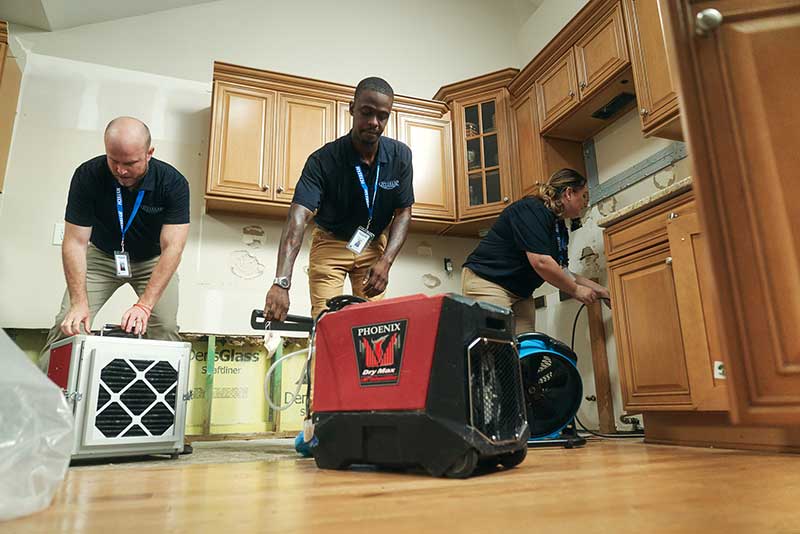
The first phase involves a detailed inspection and moisture assessment. Restoration professionals use moisture meters, hygrometers, thermal imaging cameras, and other specialized equipment to determine how far water has migrated beyond visible damage. Moisture often extends beneath flooring, behind drywall, inside insulation, and within structural framing, making comprehensive inspection far more reliable than visual observation alone.
Water extraction begins immediately after the assessment. Powerful truck-mounted or portable extraction equipment removes standing water much faster than consumer-grade wet vacuums. Removing bulk water early significantly shortens drying time while reducing additional saturation of surrounding materials.
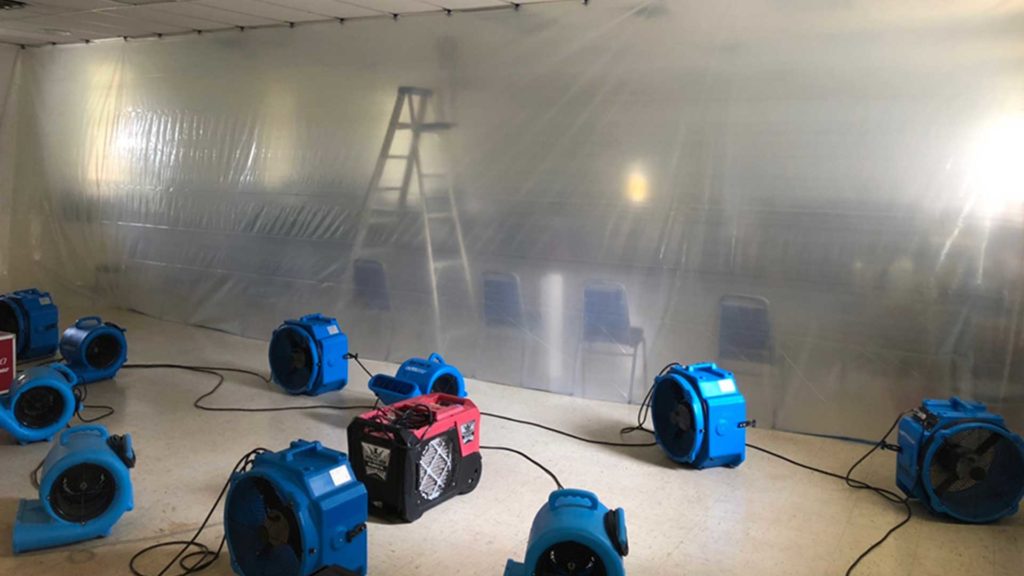
After extraction, industrial air movers and commercial dehumidifiers work together to remove remaining moisture trapped within building materials and the indoor air. Equipment placement is carefully calculated based on room dimensions, building materials, temperature, humidity, and moisture content. Throughout the drying process, technicians perform regular moisture readings and adjust equipment as conditions improve.
Cleaning and sanitizing procedures vary depending on the water category involved. Category 1 water losses may require relatively limited cleaning, while Category 2 and Category 3 losses often require more extensive cleaning protocols, containment procedures, and the removal of unsalvageable materials to support a safe indoor environment.
Documentation continues throughout every phase. Daily moisture readings, photographs, equipment logs, drying records, and inspection reports create a comprehensive project record that benefits property owners, insurance professionals, and restoration teams alike.
Professional Water Extraction and Drying Makes the Difference
Many people assume that once visible water has been removed, the property has dried. In reality, extraction removes only the surface water. Significant moisture frequently remains trapped inside walls, flooring systems, insulation, framing, crawl spaces, and concrete.
Professional restoration teams rely on high-capacity extraction equipment designed to remove substantially more water than household equipment. The less water remaining inside materials, the faster controlled drying can begin.
Commercial-grade dehumidifiers lower indoor humidity while air movers increase evaporation from wet materials. Together, these systems create an engineered drying environment that gradually removes moisture without introducing unnecessary stress to the structure.
Moisture mapping plays a critical role throughout the project. Rather than drying only visibly wet areas, technicians use moisture meters and infrared cameras to identify hidden moisture pockets that could otherwise remain undetected. This scientific approach allows drying equipment to target the areas that need it most.
Attempting to dry a property with residential fans alone often circulates humid air without removing moisture from the environment. Professional drying equipment controls temperature, humidity, and airflow simultaneously, producing more predictable and measurable drying results.
Specialized Equipment Supports Scientific Drying
Every water loss requires equipment selected specifically for the building and the conditions present. Restoration professionals evaluate construction materials, moisture content, room size, humidity levels, and airflow requirements before determining the appropriate drying strategy.
Commercial air movers create controlled airflow across wet surfaces, increasing evaporation. Refrigerant and desiccant dehumidifiers remove moisture from the air, allowing additional water to leave saturated materials. Air scrubbers equipped with HEPA filtration may be introduced when airborne particulates or microbial contamination require additional indoor air quality management.
Advanced moisture meters measure moisture content inside wood, drywall, concrete, and other structural materials without relying on visual appearance alone. Infrared imaging cameras assist technicians by identifying temperature differences that often indicate hidden moisture behind finished surfaces.
Digital documentation software allows restoration teams to record moisture readings throughout the project, creating drying charts that demonstrate measurable progress over time. These reports provide valuable communication between property owners, insurance professionals, and restoration technicians while confirming that drying objectives have been achieved.
Preventing Mold Through Prompt Moisture Control
Water damage and mold frequently become associated because excess moisture creates favorable conditions for microbial growth. While mold spores naturally exist in indoor and outdoor environments, they require moisture to grow on suitable building materials.
When moisture remains inside drywall, insulation, wood framing, carpeting, or other porous materials, microbial growth may begin developing within approximately 24 to 48 hours under favorable environmental conditions. That is why rapid extraction and controlled drying remain central goals during every emergency water damage response.
Professional mold prevention begins by removing excess moisture rather than applying chemicals alone. Drying building materials to appropriate moisture levels reduces the conditions that support continued microbial growth. If mold has already developed, restoration professionals establish containment areas to help prevent spores from spreading into unaffected portions of the building during remediation.
Throughout Beaverton, Hillsboro, Tigard, Portland, and surrounding Oregon communities, prolonged rainy seasons make moisture management especially valuable. Crawl spaces, attics, exterior wall cavities, and poorly ventilated areas often require careful evaluation following water intrusion.
Rather than attempting to address suspected mold independently, property owners benefit from professional inspection that determines the extent of moisture and whether additional containment or remediation procedures are appropriate.
Safety Remains a Priority During Water Damage Emergencies
Water damage affects more than building materials. Electrical systems, structural components, indoor air quality, and contaminated water all present potential safety concerns that require careful evaluation before cleanup begins.
Standing water may conceal energized electrical systems, damaged flooring, or unstable structural components. Category 2 and Category 3 water losses introduce additional health considerations due to biological or chemical contaminants that require specialized cleaning procedures and appropriate personal protective equipment.
Restoration professionals wear PPE selected for the specific conditions present, including gloves, eye protection, respirators, protective clothing, and other equipment as needed. Containment barriers and negative air systems may also be established to isolate affected work areas from occupied portions of the building.
Certain situations require temporary relocation from portions of the property while drying, containment, or cleaning procedures are underway. Maintaining a safe work environment supports both occupants and restoration personnel throughout the recovery process.
Understanding Insurance Documentation
For many property owners, the insurance process feels unfamiliar because water damage emergencies happen unexpectedly. Accurate documentation helps simplify communication while providing a clear record of the property's condition throughout mitigation.
Professional documentation typically includes moisture maps, photographs, equipment logs, inspection reports, daily moisture readings, material inventories, and drying progress reports. This information helps explain what occurred, what mitigation activities were completed, and how drying objectives were achieved.
Property owners also play an important role by documenting visible damage, creating inventories of affected belongings when appropriate, and maintaining communication with their insurance representative. Restoration professionals often serve as valuable guides throughout the documentation process by providing organized project information that supports efficient claim handling.
Rather than creating additional complexity, thorough documentation gives everyone involved a common understanding of the property's condition and the mitigation work being performed.
DIY Cleanup Versus Professional Restoration
Cleaning a small spill differs significantly from responding to structural water damage. Surface drying alone rarely addresses hidden moisture inside building assemblies, where long-term problems often begin.
Consumer equipment generally lacks the extraction power, airflow capacity, humidity control, and moisture detection capabilities necessary to dry structural materials efficiently. Without moisture monitoring, wet areas behind walls or beneath flooring may remain undetected long after surfaces appear dry.
Professional restoration teams combine specialized equipment with scientific drying principles developed through ANSI/IICRC standards. Continuous monitoring allows technicians to verify drying progress and adjust equipment as environmental conditions change throughout the project.
Delaying mitigation while attempting extensive do-it-yourself cleanup often allows moisture to migrate farther into structural materials, increasing drying time and creating additional restoration challenges.
Factors That Influence Restoration Costs
Every water damage event is unique, making restoration costs highly dependent on the conditions found during inspection rather than a single flat price.
Several factors influence the scope of work, including the size of the affected area, the category of water involved, the class of water damage, the amount of demolition required for unsalvageable materials, equipment needs, drying duration, accessibility of affected areas, and whether microbial remediation becomes necessary.
Minor clean water losses affecting a limited area generally involve fewer resources than extensive Category 3 water losses impacting multiple rooms or commercial facilities. Properties with hardwood flooring, crawl spaces, finished basements, or complex building assemblies may also require specialized drying techniques.
Insurance coverage often helps offset eligible restoration costs depending on policy terms and the cause of loss. Early mitigation also helps reduce secondary damage, which may decrease the overall scope of restoration.
Choosing the Right Restoration Partner
Selecting a qualified restoration company begins with verifying professional credentials, emergency response capability, and experience managing a wide variety of water damage situations.
Look for restoration professionals who follow recognized industry standards, employ IICRC-certified technicians, provide detailed moisture documentation, utilize advanced moisture detection technology, and communicate clearly throughout every stage of the project.
Experience working with residential homes, commercial buildings, healthcare facilities, schools, multifamily housing, and industrial properties demonstrates the flexibility needed to manage different construction types and occupancy requirements.
At Rytech Restoration of Portland, every project begins with science-based inspection, measurable drying goals, detailed documentation, and transparent communication designed to keep property owners informed from the initial assessment through final moisture verification.
Typical Restoration Timeline
Although every project differs, emergency mitigation usually begins immediately after the initial inspection. Water extraction often occurs on the first visit, allowing controlled drying to begin without delay.
Most structural drying projects require approximately two to five days, although larger losses, dense building materials, crawl spaces, concrete, hardwood flooring, or extensive commercial properties may require additional drying time. Daily monitoring confirms that moisture levels continue moving toward established drying goals.
Once drying has been verified through moisture measurements, the mitigation phase concludes, allowing any remaining reconstruction work outside the scope of mitigation to proceed if needed.
Preventing Future Water Damage
Many water damage emergencies can be reduced through routine maintenance and early detection. Regular plumbing inspections, appliance hose replacement, roof maintenance, gutter cleaning, and foundation drainage improvements all help reduce the likelihood of unexpected water intrusion.
Water leak detection systems and automatic shutoff devices provide additional protection by identifying leaks before they become major losses. Property owners should also inspect crawl spaces, attics, and areas around water-using appliances periodically for early signs of moisture.
Commercial property managers benefit from preventive maintenance programs that evaluate roofing systems, HVAC equipment, plumbing infrastructure, and building envelopes before small issues develop into emergency situations.
Learning how water behaves inside a structure, recognizing early warning signs, and responding quickly when problems occur allows property owners throughout Beaverton, Portland, Hillsboro, Tigard, Lake Oswego, and surrounding Oregon communities to protect both their investment and their peace of mind.
If you're experiencing water damage or have questions about moisture concerns, professional water damage restoration services in Portland can provide valuable information about the recovery process.
FAQs: Answering Your Pressing Water Damage Restoration Questions
At Rytech Portland, we understand how stressful water damage can be. That’s why we’ve created a helpful FAQ section to walk you through the entire restoration process. From what to expect during each phase to how we handle cleanup and communication, our answers are designed to provide clarity and confidence—so you feel supported every step of the way as we restore your home or business.


